A knowledge base is a centralized, searchable collection of information that helps people and systems find reliable answers quickly. I think of it as the place where scattered knowledge—documents, FAQs, policies, troubleshooting guides, product details, and team expertise—gets organized into something truly useful.
In my past work, I’ve been building the infrastructure to save and retrieve data from databases and S3, and then presenting that data, unembellished, to the user. I’m really intrigued with using additional tools to use that data in more dynamic ways.
From a technical perspective, a modern knowledge base often includes indexing, metadata, access controls, and increasingly semantic search or AI retrieval so users can ask questions naturally instead of hunting through folders. Whether it’s supporting customers, onboarding employees, or powering an AI assistant, a well-designed knowledge base turns information into a reusable asset that saves time, improves consistency, and scales expertise across an organization. That’s what I’m going to be working on here- building a knowledge base.
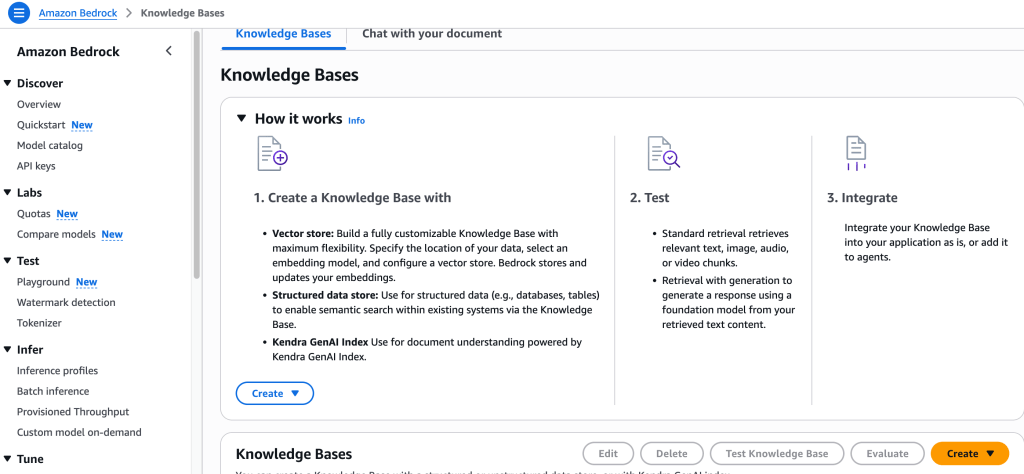
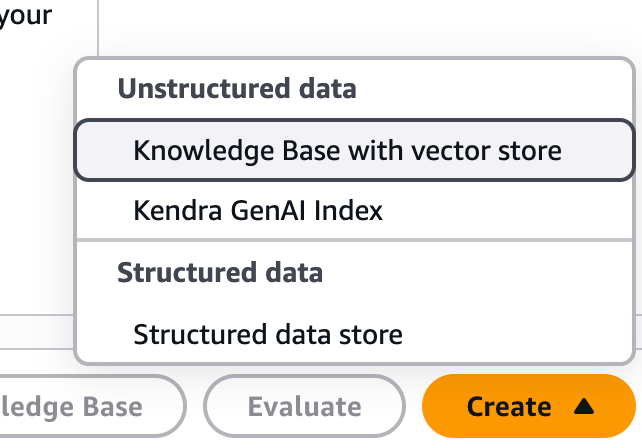
First, head to Bedrock > Knowledge Base (KB):
I created an S3 bucket and uploaded a single PDF document (a e-book on entrepreneurship).
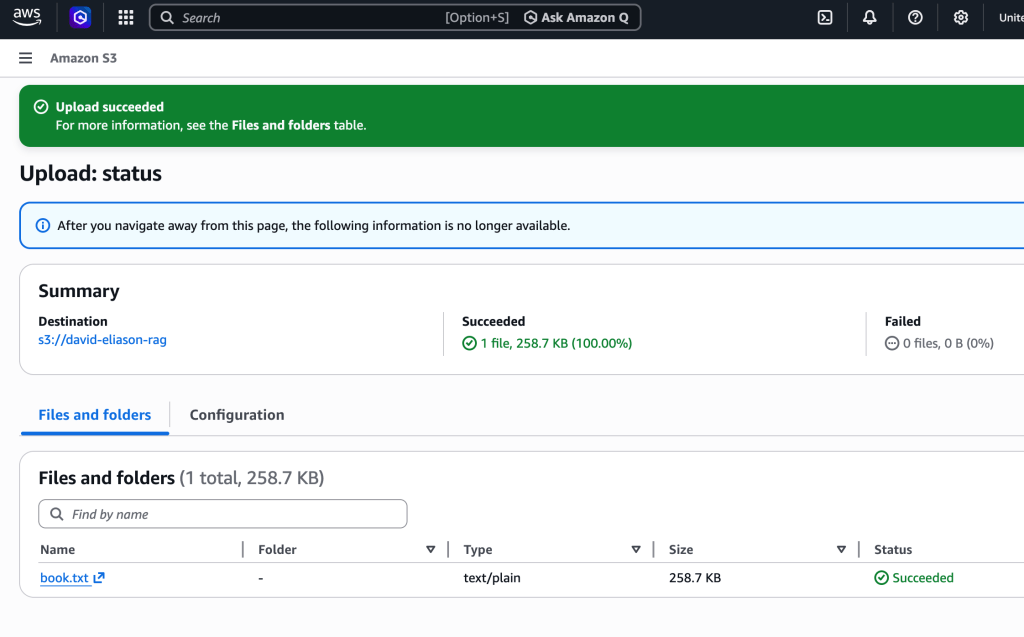
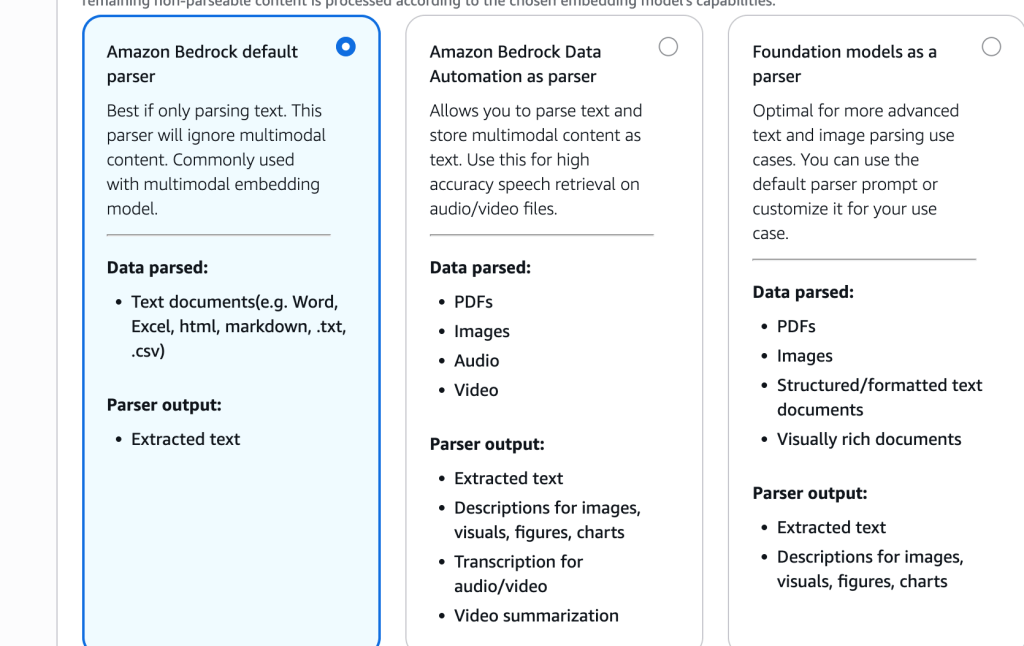
Now, we have some data (the book) in S3 that we can use to ingest into a vector database. It’s just text so the default parser will be just fine:
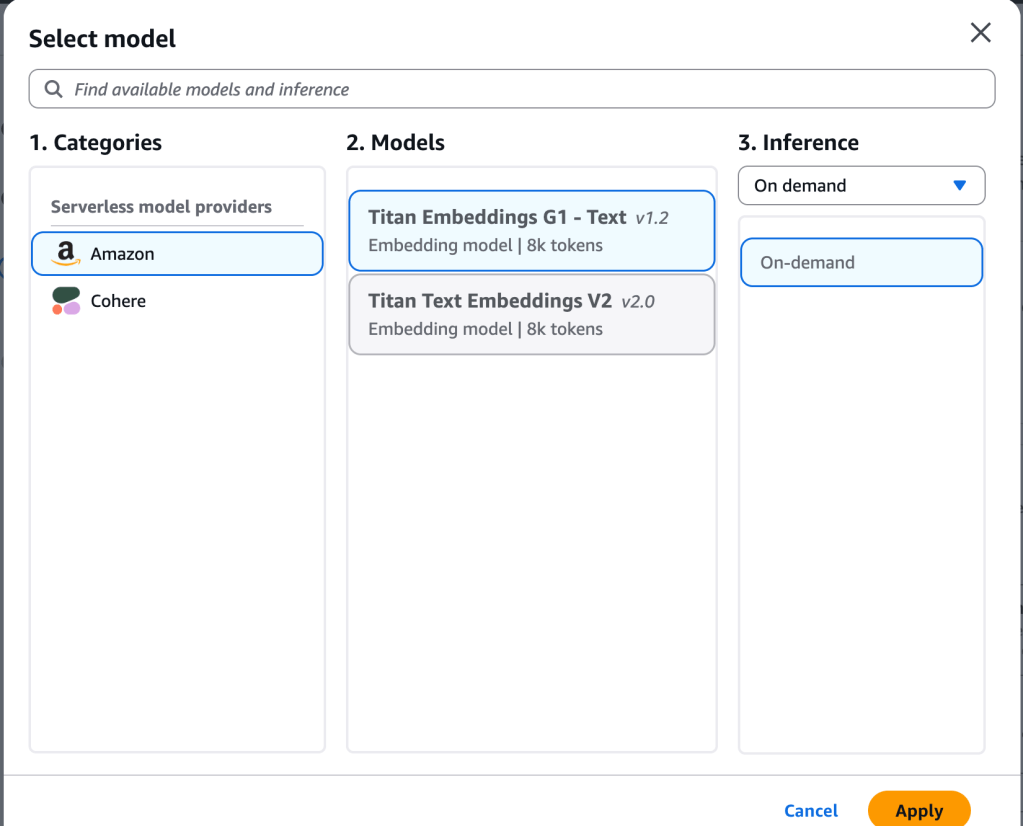
We have to select an Embeddings Model in order to translate the text (of the book) into embeddings. Embeddings are numerical values of words captured within a dimensional space; this is used to find other embeddings (words) that are are similar to the word or text in question. In the Oregon zone, these are the options available to me:
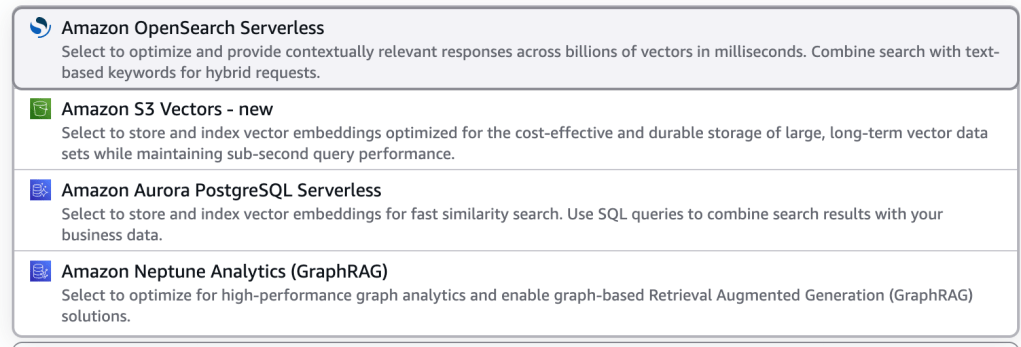
Next up we create a Vector Store. There’s a couple of options – S3 looks good because it’s more inexpensive, but I’m going to select the OpenSearch Serverless.
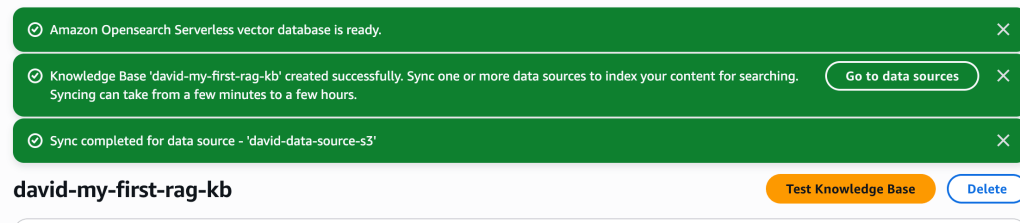
Ah! I had tried to do this within my root account, which I just learned won’t work. So I started over using IAM user. It’s good practice! Okay back on track..

Now, let’s test it out
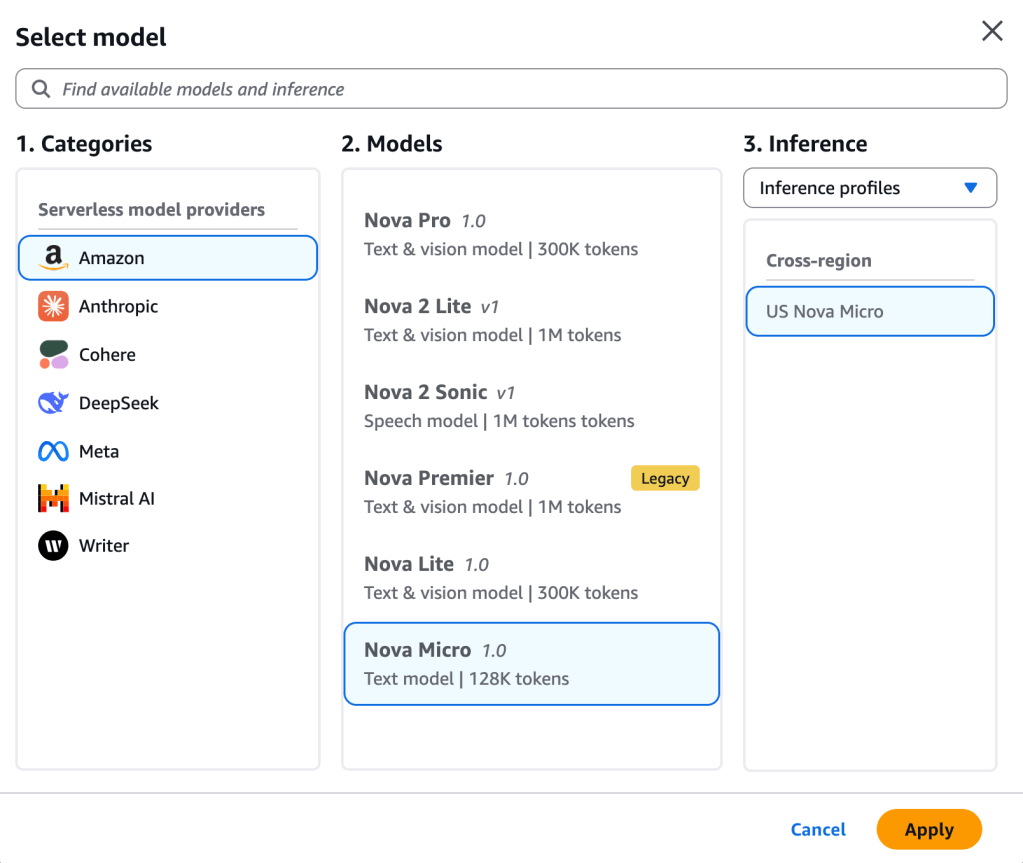
Select a model:
Create a test prompt:
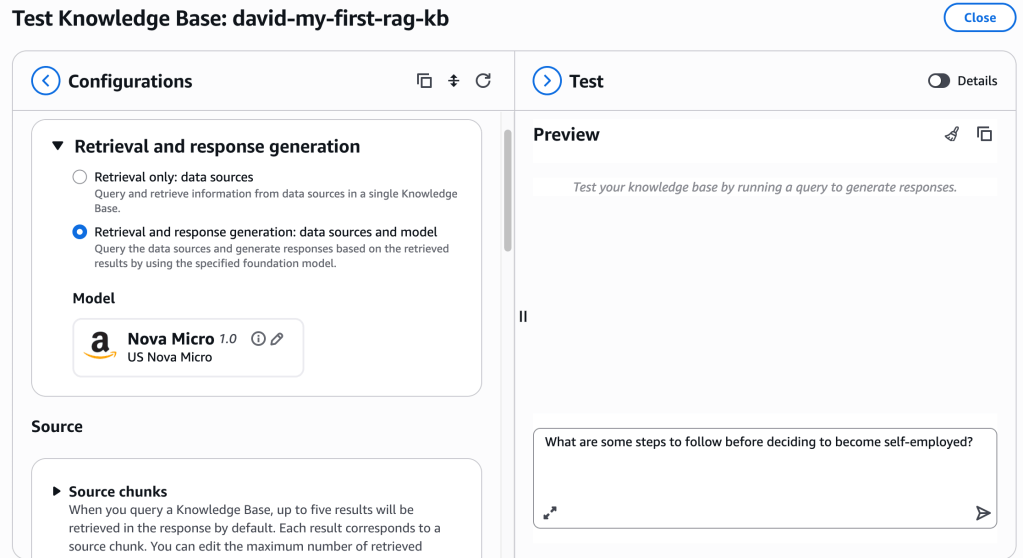
Here’s the generated response:
Before deciding to become self-employed, consider the following steps:
- Self-assessment: Evaluate your skills, experience, and passion for the work you want to do. Understand the barriers to self-employment and determine if you’re prepared to overcome them
- Research the market: Investigate the demand for your services or products, and identify your target audience. Analyze your competition and understand the industry trends
- Business planning: Create a detailed business plan that outlines your goals, target market, marketing strategy, financial projections, and operational plan
- Legal and financial considerations: Familiarize yourself with the legal requirements for starting a business, such as registering your business, obtaining necessary licenses and permits, and understanding tax obligations. Set up a separate bank account for your business and consider consulting with an accountant
- Networking and mentorship: Connect with other self-employed individuals, join business incubators, and seek advice from mentors who have successfully transitioned to self-employment
- Financial planning: Determine how much capital you need to start and operate your business. Create a budget and consider starting with a small scale to minimize financial risk
- Marketing and branding: Develop a marketing strategy to promote your business and build a strong brand. Utilize social media, networking, and other marketing channels to reach your target audience
- Continuous learning: Stay updated on industry trends, skills, and best practices. Attend workshops, webinars, and conferences to expand your knowledge and network
Remember, self-employment is not for everyone, and it requires a significant commitment of time, effort, and financial resources. Ensure you’re prepared to handle the challenges and rewards that come with it
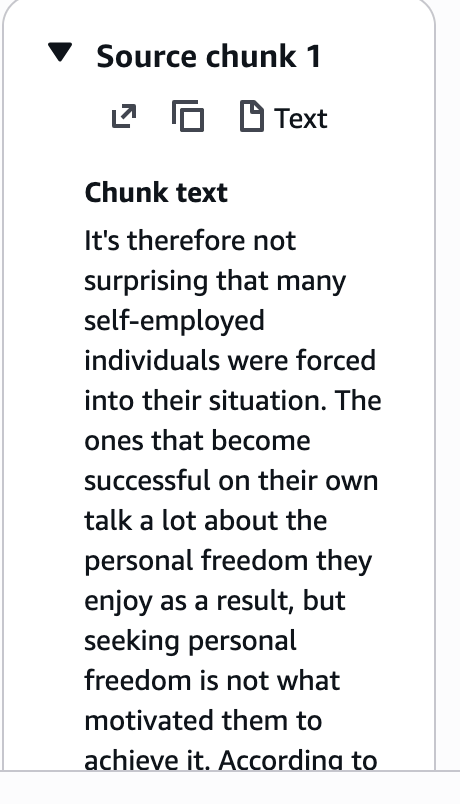
You can click Details and see the different chunks (300 each). Here’s one of them:
It’s therefore not surprising that many self-employed individuals were forced into their situation. The ones that become successful on their own talk a lot about the personal freedom they enjoy as a result, but seeking personal freedom is not what motivated them to achieve it. According to the 2012 Freelance Industry Report, 29% of freelancers fell into their self-employment by necessity, after being laid off or downsized.
It’s better to transition into self-employment on your own terms. If you start planning and set up your new business before you quit your day job, you can ensure you have income flowing from the first day you start working for yourself. This book will arm you with the details you need to make that happen, but first you need to decide if this is an effort worth taking.
Before we talk about how to become self-employed, I want you to understand the forces working against you. I want you to come to terms with them, and I want you to understand the reasons why it is worth the effort to overcome them. That’s what the first part of this book is about: understanding the barriers to self-employment, both real and imagined, and understanding why self-employment is still a goal worth pursuing. When we’re done, we’ll do a self-assessment to see if you’re really in a position to take the leap into self-employment.
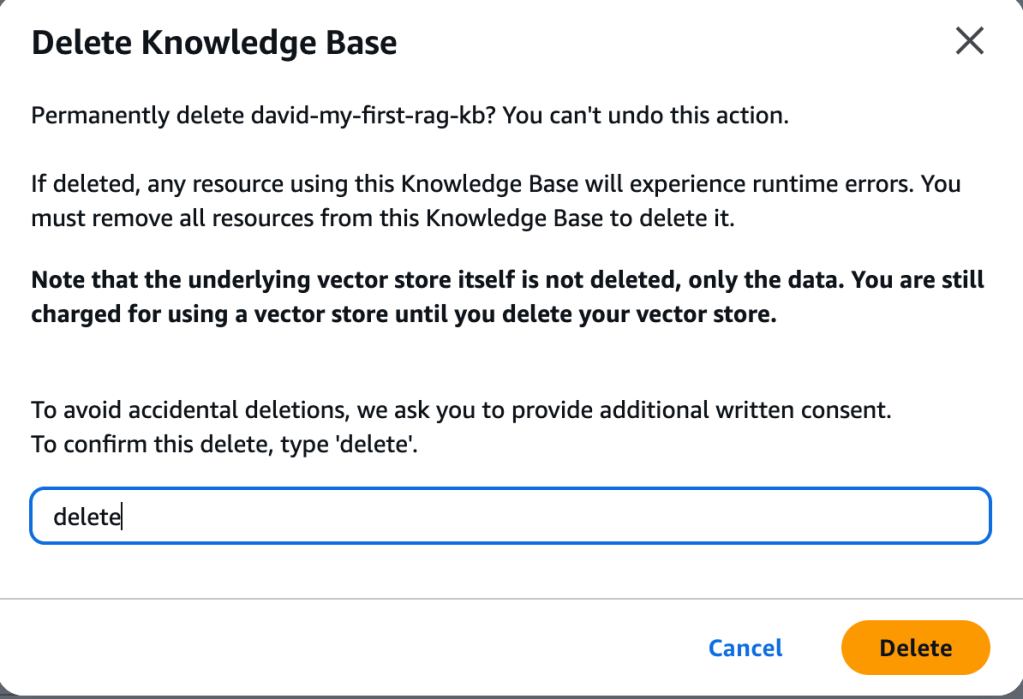
Cool! I’m going to tear it down now:
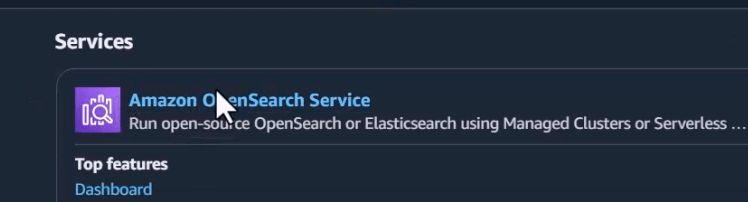
Next go to OpenSearch:
and then delete the collection:

select and delete. Done! 🙂
 davethemaker